

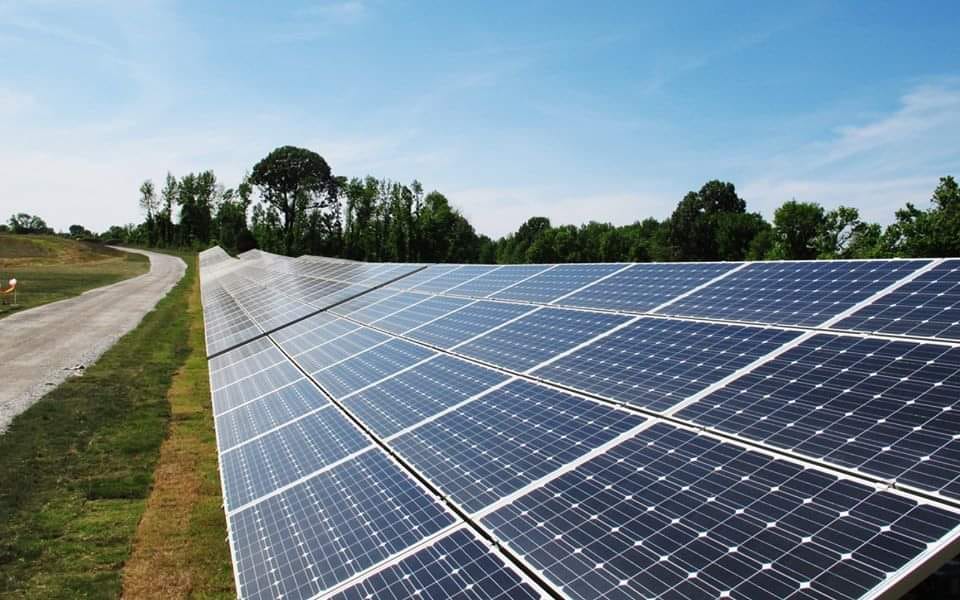
Program Overview Duration: 4–5 years (8–10 semesters) Total Credit Hours: ~150–165 Degree Awarded: B.Sc. in Renewable Energy Engineering Program Goals: - Equip students to design, operate, and maintain renewable energy systems (solar, wind, etc.). - Understand both conventional and renewable energy technologies. - Analyze economic, environmental, and technical factors in energy systems. - Develop problem-solving, teamwork, and research skills. Suggested Curriculum Breakdown Year 1 – Basic Sciences & Fundamentals - Calculus I, Calculus II - General Physics I & II - General Chemistry - Linear Algebra - Probability & Statistics - Introduction to Engineering - Technical English - Computer Skills - University Requirements (e.g., Communication, Ethics, Arabic if required) Year 2 – Engineering Fundamentals - Electrical Circuits I & II - Electronics I - Thermodynamics - Fluid Mechanics - Heat Transfer - Engineering Mechanics - Materials Science - Engineering Drawing - Renewable Energy Systems I (Introduction) - Labs & Practical Sessions Year 3 – Core Renewable Energy Topics - Electric Machines - Power Generation, Transmission & Distribution - Renewable Energy Systems II (Solar, Wind) - Energy Storage Systems - Photovoltaic Systems Design - Environmental Impact of Energy Systems - Instrumentation & Measurements - Elective I (e.g., Bioenergy, Geothermal) Year 4 – Design & Analysis - Advanced Solar & Wind Energy Systems - Energy Economics & Policy - Energy Management & Efficiency - Control Systems for Energy - Smart Grids & Grid Integration - Elective II (e.g., Hydrogen Energy, Sustainable Building Design) - Capstone Project I (Design Phase) - Internship / Field Training Year 5 (if applicable) – Specialization & Graduation - Grid-Tied Renewable Energy Systems - Safety & Environmental Regulations - Power Quality & Protection - Capstone Project II (Implementation & Report) - Elective III (Advanced Topics or Research Project) Recommended Skills & Tools - Software: MATLAB, PVSyst, HOMER, AutoCAD, ETAP - Programming: Basic Python/C++ is a plus - Simulation & modeling are critical for real-world applications - Strong English for international standards and research - Teamwork, communication, and field experience are essential